
By Bobby Carlton
Where Humanoid Robot Reliability Actually Comes From
Humanoid robot reliability crossed a threshold this spring, and if you run a warehouse, a plant, a farm, or a fleet, it changes your math too.
The short version is that humanoid robots stopped performing and started working. Figure ran three of its machines on a package line for 200 straight hours, livestreamed, no edits, close to a quarter million packages sorted. A month later AGIBOT put its robots on a live tablet production line at a real factory in China and streamed six days of them doing quality inspection next to human workers, plugged into the plant’s own production system.
Forget the horse race between the two companies. The thing worth paying attention to is what became provable. For years, “can a robot do this job?” was answered with a thirty-second clip, and everybody in the industry knew the clip proved almost nothing. Now the answer comes in machine-hours. Days of continuous, unscripted, watched-by-anyone work. That’s a shift you could schedule, and once a robot can work a full week, a bunch of doors that were stuck start to open up and take you down a hallway of improved work results and ROI.
What This Actually Unlocks
Think about the jobs that have been hardest to staff for a decade. Third shift. The repetitive, physically grinding tasks with brutal turnover. Quality inspection at hour nine, when human attention fades and defects slip through. The dangerous corners of a plant nobody wants to work. These were never problems of willpower. They were problems of endurance and consistency, the exact two things humans are worst at during boring work (sorry humans) and machines are best at.
A robot that runs 200 hours isn’t impressive because the number is big. It’s impressive because it means the overnight sort can actually get covered. The inspection station performs the same at 3 a.m. as it does at 3 p.m. The task with 300% annual turnover stops being a hiring treadmill. For a 3PL bleeding money on peak-season temp labor, or a manufacturer whose line slows every time a station goes unfilled, this is the difference between robotics as a curiosity and robotics as a line item that pays for itself.
The reliability numbers matter more than the endurance ones, honestly. On a line moving 300 units an hour, a 99% success rate still means three failures an hour, all day. The recent runs are pushing well past that, and that’s the threshold where a robot goes from “interesting pilot” to “thing I can build a schedule around.”
Where That Reliability Actually Comes From
Here’s the part that matters if you’re wondering whether this approach works for your operation and not just theirs…or your competitors.
That reliability wasn’t built on the factory floor. Figure’s control system trained on more than a thousand hours of human motion data and simulation time spread across two hundred thousand parallel virtual environments before it touched a real package. The robot lived entire careers in simulation first. Every bad grip, every odd package, every stumble and recovery, rehearsed thousands of times in a virtual world so the real one held no surprises. AGIBOT works the same way, using simulation-based validation to get its robots integrated onto a live line in under two days.
That’s the actual technology making the difference here. Not stronger arms or better batteries. Practice, at a scale only simulation makes possible.
And it’s why this translates beyond the companies in the headlines. The playbook isn’t buy the robot from the demo. It’s build the virtual version of your task, your products, your building, and let the robot earn its reliability there first. Your weird tote sizes, your dock layout, your lighting, your worst-case Friday. All of it can be simulated, and the edge cases your operation would take years to encounter naturally can be generated synthetically in weeks.
Where FS Studio Sits
This is the layer we work in. Building the simulation environments and synthetic data pipelines that give a robot those virtual lifetimes of practice before it ever earns a real machine-hour on your floor. The endurance runs get the views. The simulation work upstream is what makes them possible.
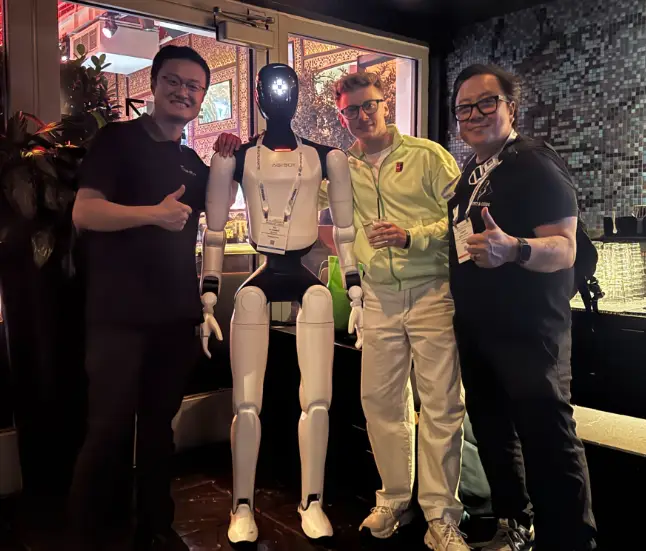
So when you watch the robots grind through hour 190, the takeaway isn’t the future is coming. It’s more practical: reliability is now manufacturable. It gets built in simulation, deliberately, before deployment. Which means the question for your operation isn’t whether robots will ever be dependable enough. It’s whether anyone has built the virtual version of your work yet.
The demo era answered can it be done? The endurance era answers the questions of will it?…and for every shift? That second question is the one your business actually needed answered.
If you need to dig deep into all of this, hit us up and lets talk! We have amazing robotics experts on the team who can help you navigate all of this and help you with a plan.